Management of severe aortic stenosis1


BACK


Carefully evaluate the patient’s technical suitability and risk-benefit ratio of intervention modes with the Heart Team

| Tissue valves | Mechanical valves | |
|---|---|---|
| Long-term blood thinner required | No1 | Yes Daily blood thinner medication and regular blood tests for rest of life1 |
| Valve longevity / durability | Approximately 12–15 years,* depending on type of valve, patient characteristics, and other factors2 RESILIA tissue** has been shown in animal studies to have less calcium build-up, potentially allowing the valve to last longer†3 | Over 20 years4 |
| Lifestyle limitations | No | Yes Limits active lifestyle due to use of blood thinners5 |
| Dietary restrictions | Yes May need to reduce calcium intake6,7 | Yes May need to reduce foods high in vitamin K or foods that may increase the effect of blood-thinning medicines6,7 |
| Noticeable sounds from valve | No | Yes Clicking sound as valve opens and closes |
| Pregnancy considerations | No No known pregnancy complication risk1 | Yes High pregnancy complication risks due to use of blood thinners1 |
sAVR, surgical aortic valve replacement; TAVI, transcatheter aortic valve implantation
*Some tissue valves such as the PERIMOUNT valve have been shown to last up to 19.7 years8
** No clinical data are available that evaluate the long-term impact of RESILIA tissue in patients
† RESILIA tissue has not been studied for long term results in patients
References:
| TAVI (tissue valve) | sAVR (tissue valve) | sAVR (mechanical valve) | |
|---|---|---|---|
| Valve-related considerations | |||
| Long-term blood thinner required | No1 | No1 | Yes Daily blood thinner medication and regular blood tests for rest of life1 |
| Valve longevity / durability | Approximately 5–10 years2,3 As TAVI is a new technology, durability has not been fully established as yet2 | Approximately 12–15 years,* depending on type of valve, patient characteristics, and other factors4 RESILIA tissue** has been shown in animal studies to have less calcium build-up, potentially allowing the valve to last longer†5 | Over 20 years6 |
| Lifestyle limitations | No | No | Yes Limits active lifestyle due to use of blood thinners1 |
| Dietary restrictions | Yes May need to reduce calcium intake7,8 | Yes May need to reduce calcium intake7,8 | Yes May need to reduce foods high in vitamin K or foods that may increase the effect of blood-thinning medicines7,8 |
| Noticeable sounds from valve | No | No | Yes Clicking sound as valve opens and closes |
| Pregnancy considerations | No No known pregnancy complication risk1 | No No known pregnancy complication risk1 | Yes High pregnancy complication risks due to use of blood thinners1 |
| Procedure-related considerations | |||
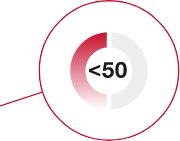
| Recommended age for procedure | >80 years10 TAVI can also be considered for younger patients with a life expectancy <10 years10 | <65 years10 | <50 years10 |
| Indication | Recommended in symptomatic AS patients who are not suitable for sAVR1 | Recommended in symptomatic AS patients with low surgical risk‡1 In high risk patients,†† the decision between sAVR and TAVI should be made by the Heart Team according to the individual patient characteristics (TAVI being favoured in elderly patients suitable for transfemoral access) | Recommended in symptomatic AS patients with low surgical risk‡1 In high risk patients,†† the decision between sAVR and TAVI should be made by the Heart Team according to the individual patient characteristics (TAVI being favoured in elderly patients suitable for transfemoral access) |
| Valve access considerations | Yes1 Requires safe transfemoral access to the heart or alternative access routes | No Direct access to heart through open or minimally invasive heart surgery | No Direct access to heart through open or minimally invasive heart surgery |
| Visible scarring | Potential scarring on groin for transfemoral access‡‡ | Potential scarring on chest | Potential scarring on chest |
| Recovery time | Up to 3 months11 | Up to 3 months12 | Up to 3 months12 |
AS, aortic stenosis; sAVR, surgical aortic valve replacement; STS, Society of Thoracic Surgeons; TAVI, transcatheter aortic valve implantation
* Some tissue valves such as the PERIMOUNT valve have been shown to last up to 19.7 years9
** No clinical data are available that evaluate the long-term impact of RESILIA tissue in patients
† RESILIA tissue has not been studied for long term results in patients
†† High surgical risk is defined as: STS or EuroSCORE II ≥4% or logistic EuroSCORE I ≥10% or other risk factors not included in these scores such as frailty, porcelain aorta, sequelae of chest radiation
‡ Low surgical risk is defined as: STS or EuroSCORE II <4% or logistic EuroSCORE I <10% and no other risk factors not included in these scores, such as frailty, porcelain aorta, sequelae of chest radiation
‡‡ Incision may be made near shoulder, ribs, or top of breastbone for other approaches if transfemoral is not suitable
References:
BP, blood pressure; LVEF, left ventricular ejection fraction; sAVR, surgical aortic valve replacement; TAVI, transcatheter aortic valve implantation
References
1. Baumgartner H, Falk V, Bax JJ, et al. Eur Heart J. 2017;38(36):2739–2791.